Not a package list — an honest, hour-by-hour picture of a surf-and-stay week in Sagres, including what happens when the west coast is blown out.
Most surf camp pages tell you what is included. Very few tell you what the week feels like. This one does — a realistic run through seven days of a surf-and-stay week in Sagres, including the day the wind ruins the plan, because that day always comes and how a school handles it is the actual difference between camps.
Before you arrive
We ask two things when you book: your surfing level, honestly stated, and whether you would rather surf every single day or have a rest day built in. Those two answers shape the week.
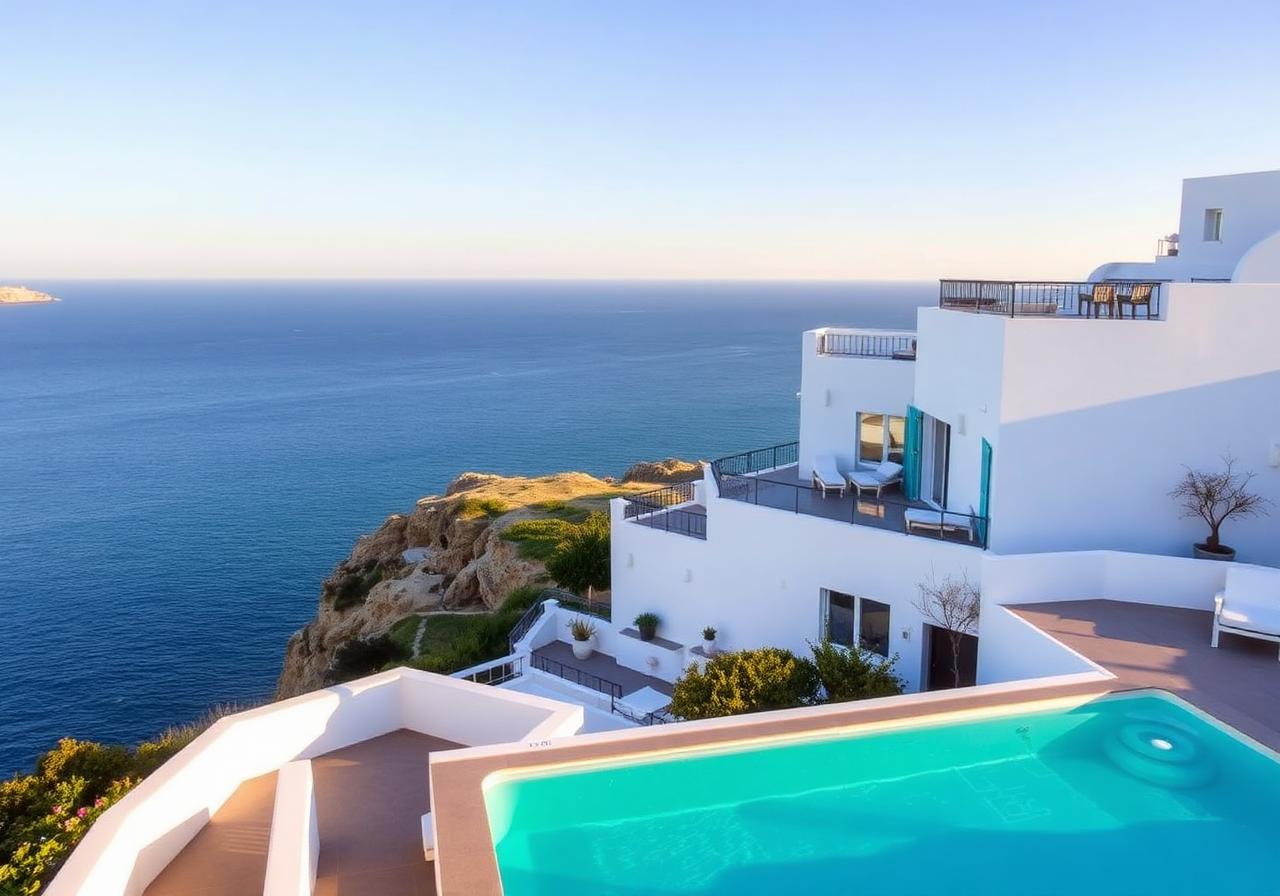
Accommodation is in Sagres itself, walking distance from the town rather than out on an industrial estate. Depending on the package that is a room at our partner accommodation or the Memmo, with breakfast. You are five minutes from the surf centre and ten from Mareta.
Day 1 — Sunday: arrive, assess, get wet
Most people fly into Faro and drive the ninety minutes down. Check in during the afternoon, then come by the surf centre so we can size boards and wetsuits before the morning rush.
If you arrive early enough and conditions allow, we will get you in the water for a short session the same day. It is not a lesson so much as a look — it tells us more about your paddling and pop-up than any form you fill in, and it means Monday starts at the right level.
Evening: dinner in town. Sagres is small. You will have seen most of it by Tuesday.
Day 2 — Monday: the first proper session
The day starts at the surf centre around 09:00. We have already looked at the buoy readings, the wind forecast and the tide, and picked the beach. In autumn and winter that is usually the west coast — Cordoama is our home beach — and in a big swell it is Mareta on the south side.
Transport is in the school van and is included, which matters more than it sounds: you are not driving unfamiliar dirt tracks to a beach car park, and the drive itself is where the instructors explain what the ocean is doing today.
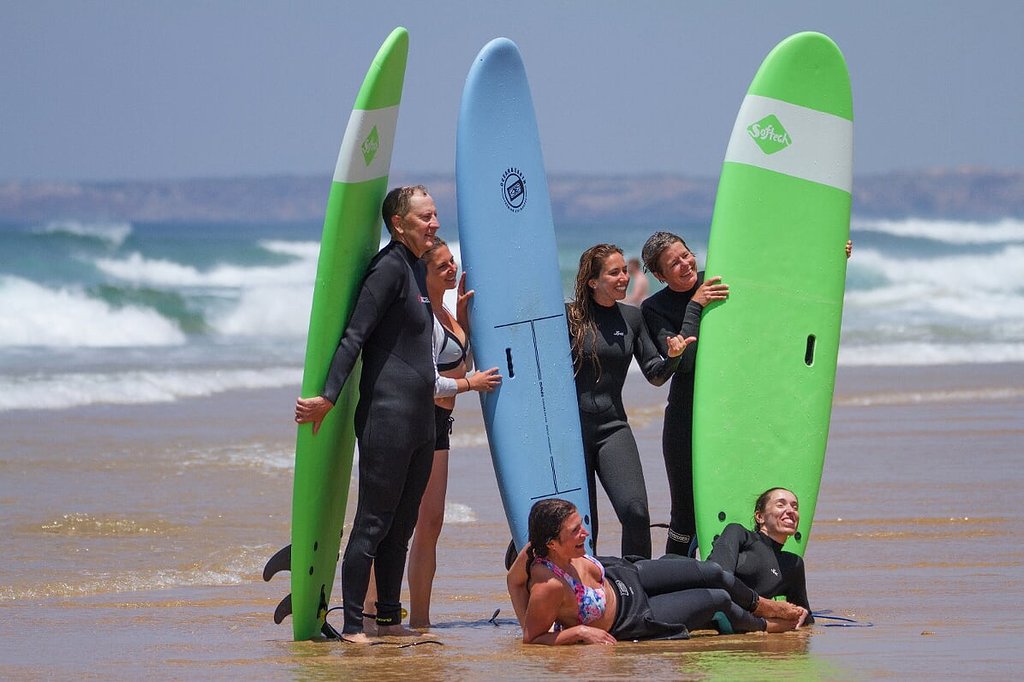
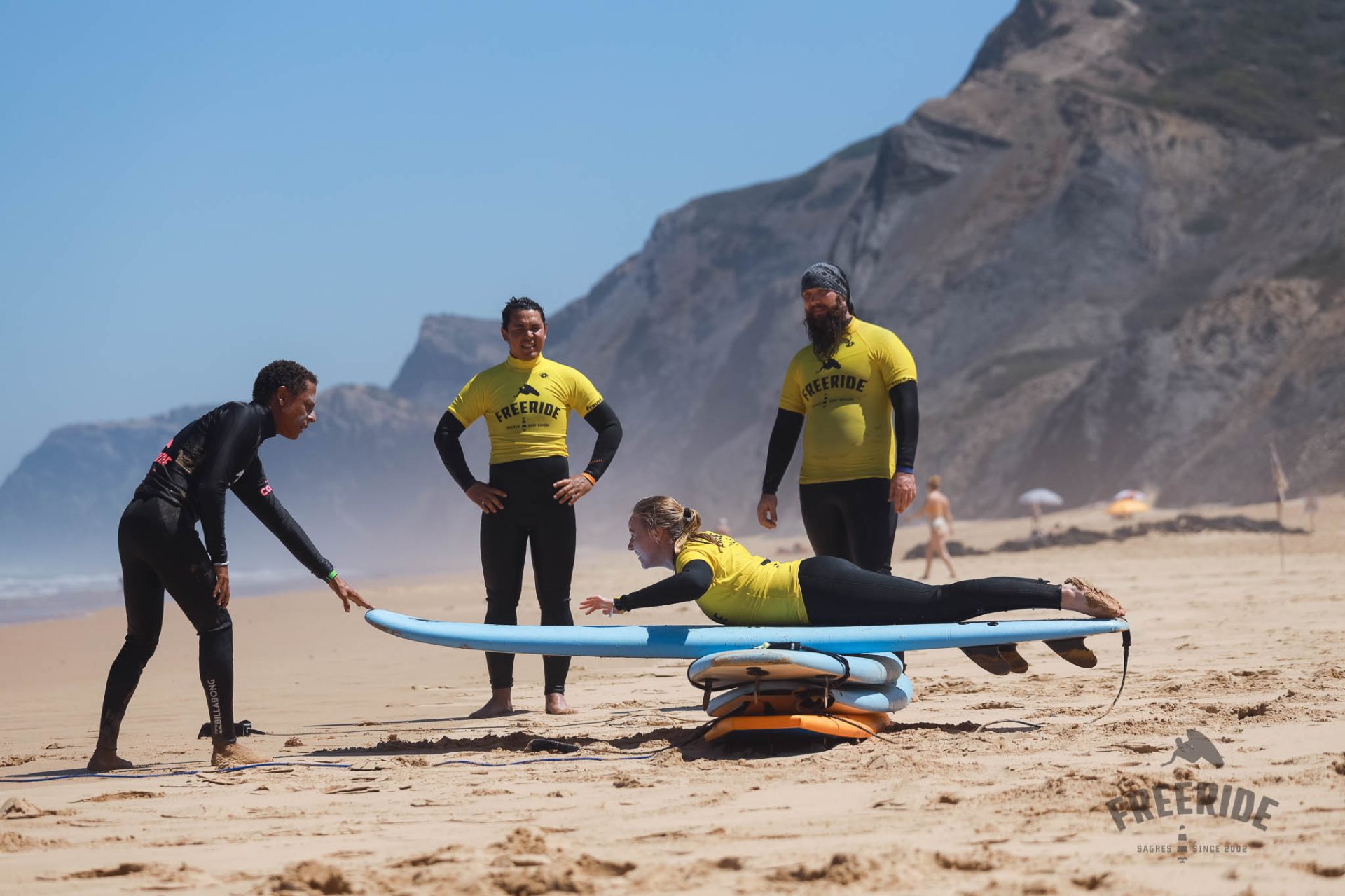
A group session runs 2h30 door to door: gear fitting, beach briefing, warm-up, pop-up drills on the sand, then the bulk of it in the water with an instructor within shouting distance. You will be tired in a way that surprises you.
Afternoon is yours. Most people sleep.
Day 3 — Tuesday: repetition, which is the point
Day two of surfing is where consecutive days start paying off. Your paddling is already better, the wetsuit is no longer a wrestling match, and the instruction shifts from surviving the wave to reading it — where to sit, when to start paddling, how to look down the line instead of at your feet.
This is the argument for a week rather than a couple of one-off lessons. Surfing is a motor skill; it consolidates overnight and it decays fast. Five mornings in a row is worth far more than five mornings spread over a summer.
Day 4 — Wednesday: the day the wind wins
At some point in the week the forecast turns. Twenty-five knots of onshore, west coast a mess, south coast small and choppy. Here is what actually happens.
First, we look at whether there is a window. Wind here often builds through the morning, so an 08:00 start on a day we would otherwise write off can produce two clean hours. If there is a window, we take it and start early.
If there is no window, the session moves. That might mean shifting to the sheltered corner at Mareta and running a session focused on wave-reading and positioning in small conditions, or it might mean swapping the day for a theory-and-video session plus a rest day, and adding the surf back later in the week.
What we do not do is put people in the water in conditions that will teach them bad habits or scare them. A week has enough days in it to move things around.
A blown-out day is a good day for the Cape St. Vincent walk, the Rota Vicentina trail north from Sagres, or a drive up to Carrapateira with the boards in case the northern beaches are cleaner.
Day 5 — Thursday: your best surfing of the week
Statistically this is the day it clicks. Enough water time to be comfortable, enough rest not to be wrecked, and — after a windy day — often the cleanest conditions of the week as the swell fills in behind the front.
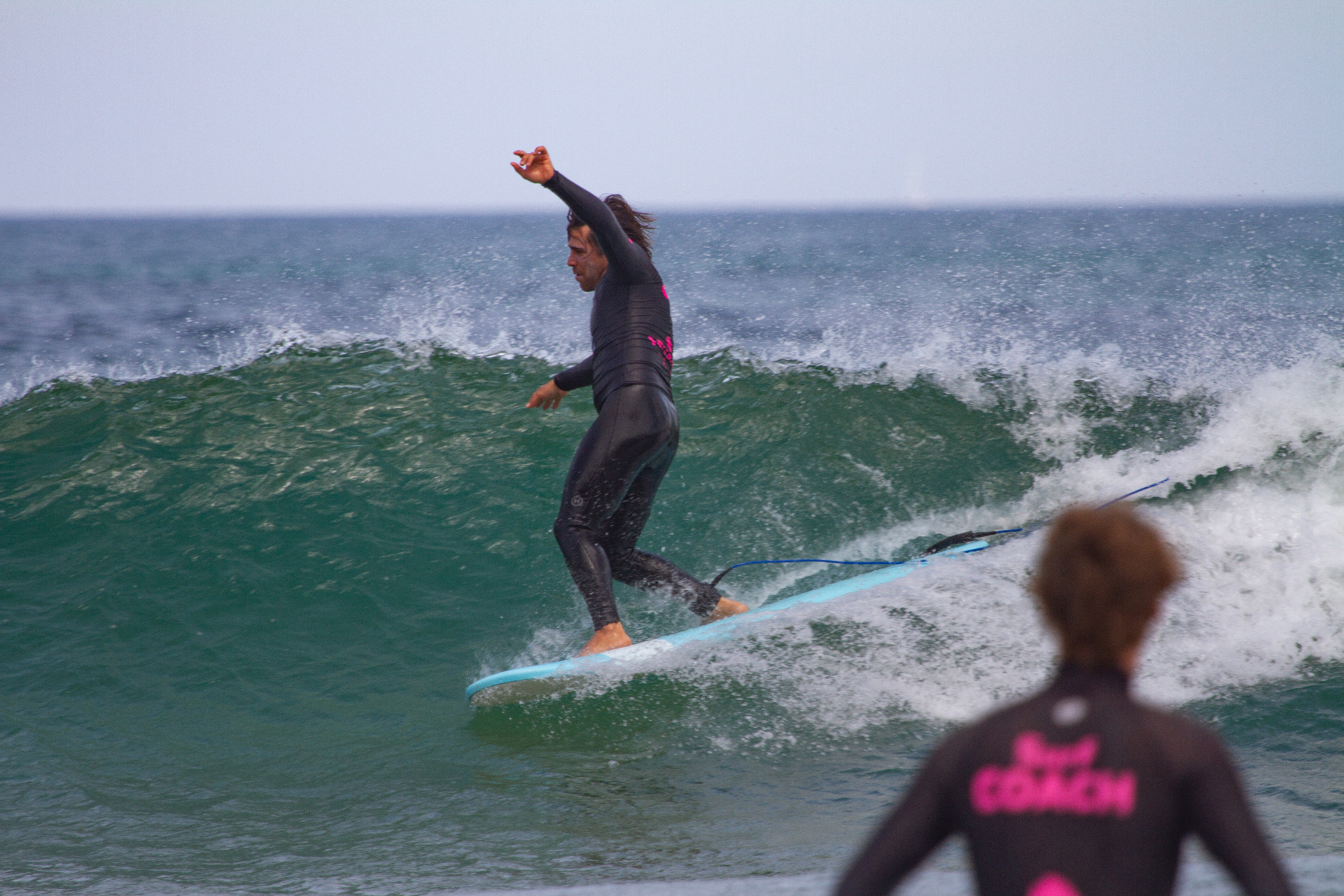
For improvers this is when we push: unbroken waves, angling the take-off, first proper turns. For beginners it is usually the day of the first green wave ridden to the beach. We film when we can; watching yourself is the single fastest correction tool there is.
Day 6 — Friday: pick your own adventure
By Friday people split. Some want another coached session. Some want to rent a board and go surf on their own, which is the real goal — a week that ends with you able to look at a forecast, pick a beach and paddle out unsupervised is a week that worked.
Independent surfers on the guiding programme spend this day at whichever of the twelve-plus breaks along the two coasts is working best, which on a good Friday might mean a spot you would never find on your own.
Day 7 — Saturday: last session, then go slowly
A short morning session, a final debrief with notes on what to work on next, and then the drive back to Faro. Do not book a lunchtime flight; you will resent it.
What is included, plainly
Accommodation with breakfast, your surf sessions with certified instructors, board and wetsuit for the duration, transport to whichever beach we choose each day, and sports insurance. Packages run as short as a weekend (2-3 nights, 1-2 lessons), a mid-week block (3-5 nights, 2-3 lessons) or the full week (6-7 nights, 5 lessons).
Not included: flights, car hire, dinners and the beers afterwards.
Who a week here suits
Complete beginners who want to leave actually able to surf rather than having ticked a box. Improvers stuck between white-water and green faces, which is the hardest plateau in surfing and the one consecutive days break fastest. Mixed-ability groups and families, because two coastlines mean everyone can surf on the same day at their own level.
It suits people who like small operations. We are not a hundred-bed camp with a nightly foam party. It has been the same school in the same town since 2002.
Frequently Asked Questions
How many surf lessons are in a week-long surf and stay package?
A full-week package (6-7 nights) includes 5 surf sessions, normally run on consecutive mornings. Shorter packages include 1-2 sessions over a weekend or 2-3 over a mid-week stay.
What happens if the weather is bad during my surf week?
We move the session rather than cancel it — starting earlier to beat the wind, switching from the west coast to the sheltered south coast at Mareta, or swapping the day with a rest day and adding the surf back later in the week.
Do I need my own equipment for a surf and stay week?
No. Board and wetsuit are included for the duration of your stay, along with transport to the beach. Bring a swimsuit, a towel, sunscreen and water.
Is a surf and stay week suitable for complete beginners?
Yes, and it is the format we would recommend for beginners. Five consecutive mornings consolidates the skill far better than isolated lessons, and Sagres has beginner-friendly sandy beaches on both coasts.
Where is the accommodation?
In Sagres town, within walking distance of the surf centre and Praia da Mareta, with breakfast included. Exact accommodation depends on the package and the season.