Warm water, the first proper Atlantic swells and empty line-ups. Why autumn is quietly the best surf season in Sagres — and how to plan around it.
Ask anyone who lives in Sagres year-round when they would take their own surf holiday and almost nobody says August. They say late September, or October. It is the part of the year where three things line up at once: the water is still summer-warm, the North Atlantic has started producing again, and the July and August crowds have gone home.
This is a guide to what those two months actually look like from the ground, written by people who are in the water here every day of them.
What the ocean is doing in September and October
Through July and August the Azores high sits over the eastern Atlantic and flattens things out. Sagres still gets waves — the west coast picks up almost anything — but they are mostly small, short-period windswell that comes up in the afternoon with the nortada, the north wind that blows down this coast all summer.
From early September that pattern begins to break. The first low-pressure systems track across the North Atlantic and send long-period groundswell down to the south-west corner of Portugal. Instead of choppy waist-high, you start getting clean, organised chest-to-head-high waves with real shape, and mornings that are glassy rather than blown out.
October takes it further. The swell window is fully open, the nortada eases, and offshore mornings become the norm rather than the exception. It is also the month where you are most likely to get a proper swell — the kind where Tonel and Beliche turn on and the west coast gets big enough that beach choice matters.
Water and air temperature: what you actually wear
Water temperature in Sagres peaks late. September sits around 19-21°C and October around 18-20°C — warmer than August on the west coast, because the summer upwelling that pushes cold water up the Costa Vicentina eases off.
In practice: a 3/2mm full wetsuit is comfortable through both months. Early September you can still surf in a shorty on the south coast. By late October a 4/3 is nice on a dawn session but not essential. Air temperature runs mid-20s in September and low 20s in October, with sea fog possible in the mornings and the water often warmer than the air at 8am.
We rent both 3/2 and 4/3 wetsuits, and every lesson and guided session includes the suit, so you do not need to pack one.
Which beach on which day
The reason Sagres works so well in autumn is the two-coast geography. Within twenty minutes of the town you can be on a west-facing beach that soaks up every bit of Atlantic swell, or a south-facing beach that is tucked completely out of it.
On a small early-September day, the west coast — Cordoama, Castelejo, Amado — is where the waves are. Long sandy bottoms, room to spread out, and the mellow white-water that beginners need.
When the first big autumn swell arrives and the west coast is 10 foot and unsurfable for most people, the south coast is the answer. Mareta is filtered right down and often perfect for lessons on exactly the day the west is closing out. Tonel sits in between and picks up more than Mareta, which makes it the intermediate's choice on a mid-size swell.
On a lesson or a guided session we make this call on the morning, after looking at the buoys and the wind. You do not need to work it out yourself — but it is worth understanding, because it is the reason a Sagres autumn trip almost never gets skunked.
Autumn is the best time to be a beginner here
There is a persistent idea that beginners should come in summer because the waves are small. That is only half right. Summer waves are small but often disorganised and wind-affected, and the beaches are busy, which means more people to dodge on your first waves.
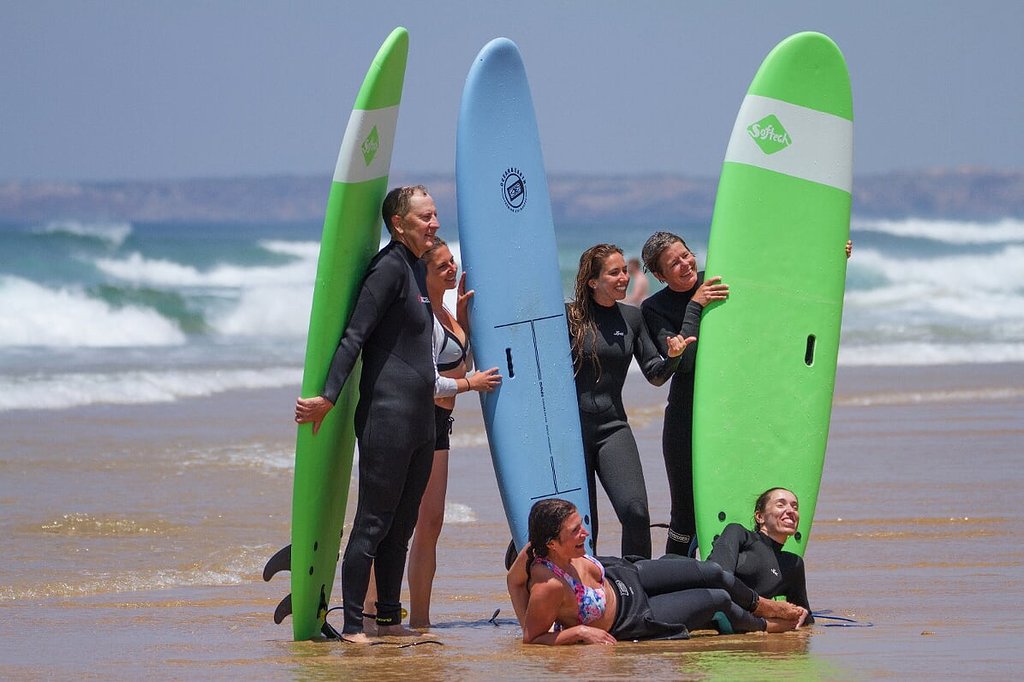
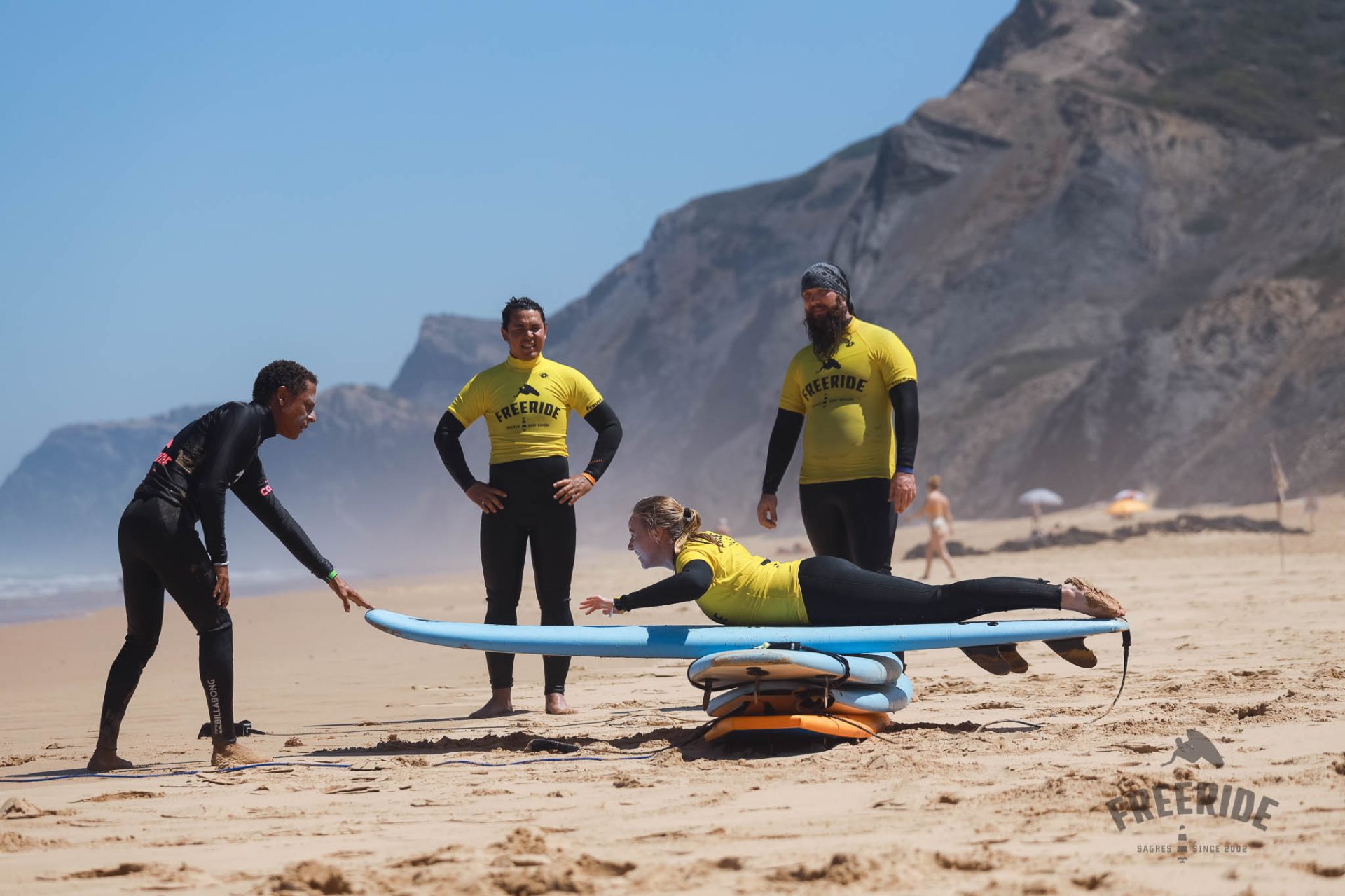
In September and October the swell is cleaner and more predictable, so instructors can put you in exactly the right spot on the sandbank instead of chasing a shifting peak. The line-ups are quiet. Groups are smaller. And the water is at its warmest all year, which matters more than you expect on a two-and-a-half hour session.
If you have been putting off learning because you thought you had to book for August, book for the last week of September instead.
And the best time to be an improver
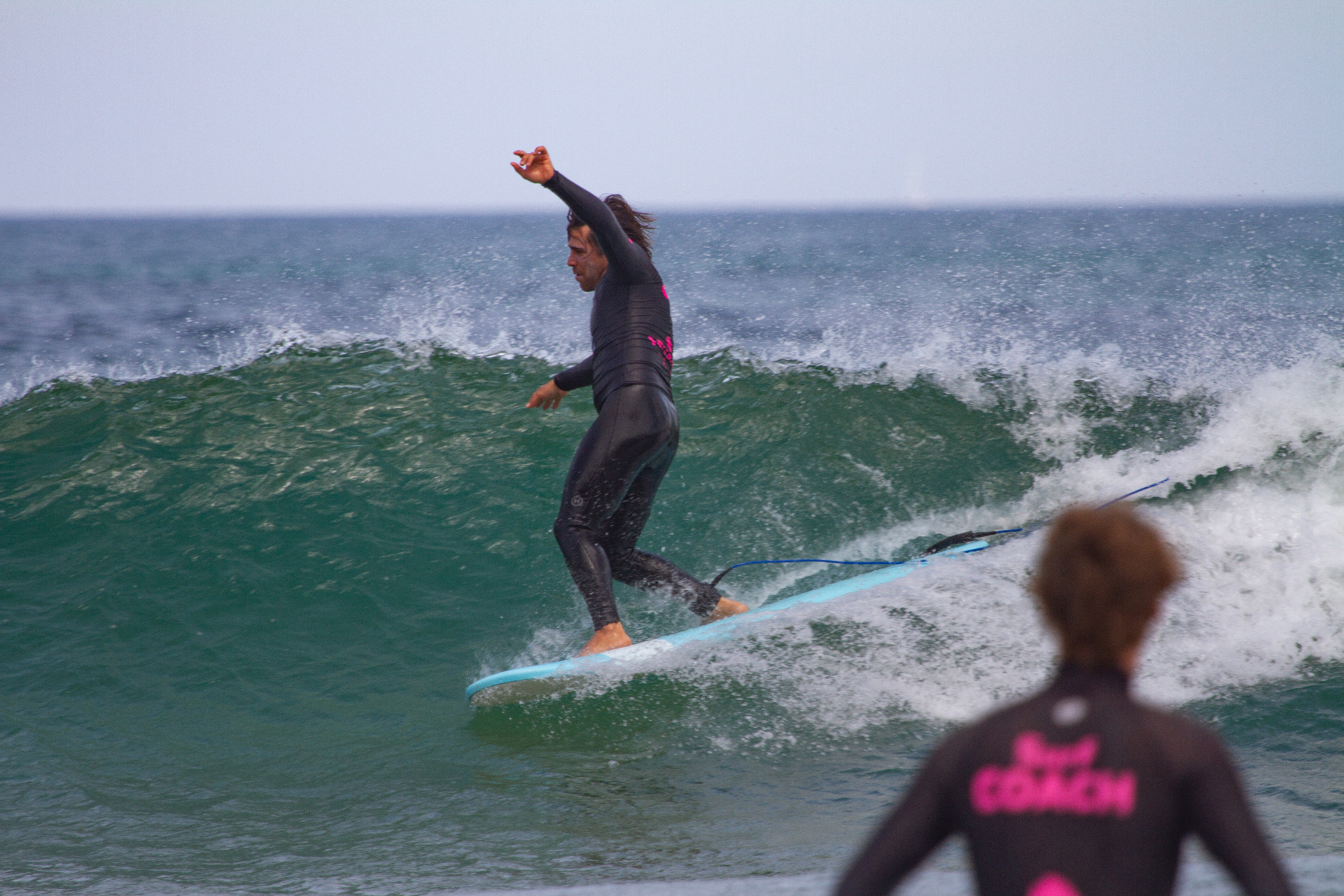
Autumn is when you can genuinely progress. Consistent groundswell gives you the repeatable, well-formed waves you need to move from white-water to green-face surfing, and quiet line-ups mean you actually catch enough of them for the practice to stick.
This is the season we point people at a 5-day package rather than a single lesson. Five consecutive mornings in autumn conditions moves people further than a fortnight of summer sessions.
For surfers who are already independent, our guided surfing runs from September through December — you get transport, a local reading the swell, and access to twelve-plus breaks along both coasts without spending your holiday driving around looking for waves.
The rest of the trip
Practical things worth knowing. Accommodation is markedly cheaper after mid-September and much easier to find at short notice. Most restaurants in Sagres stay open through October, though a few close for the season at the end of the month. Flights into Faro are cheaper and the drive down is quiet.
It is also the best time of year for everything else the Costa Vicentina is good at — the cliff walk to Cape St. Vincent without the coach parties, the Rota Vicentina trails, and sunsets that arrive at a civilised hour.
Book it around the swell, not the calendar
If you have flexibility, the sweet spot is the second half of September through to the end of October. If you have to pick one week, late September gives you the best mix of warm water and real waves.
Whatever you book, we choose the beach on the day. That is the whole point of being based on a corner with two coastlines.
Frequently Asked Questions
Is September a good month to surf in Sagres?
September is one of the best months of the year in Sagres. Water is still 19-21°C, the first long-period Atlantic groundswells arrive, mornings are often glassy, and the summer crowds have gone. It suits beginners and improvers equally well.
How warm is the water in Sagres in autumn?
Around 19-21°C in September and 18-20°C in October — warmer than mid-summer on the west coast, because the summer upwelling eases off. A 3/2mm wetsuit is comfortable through both months.
Are the waves too big for beginners in October?
No. On days when the west coast is too big, lessons move to the south coast at Mareta, which is sheltered from Atlantic swell and stays beginner-friendly. Choosing the beach on the day is exactly why Sagres works in autumn.
Do surf schools in Sagres stay open after summer?
Yes. FreeRide runs lessons, rentals and surf-and-stay packages year-round, and our surf guiding service operates specifically in the September-to-December and February-to-June windows when the swell is best.